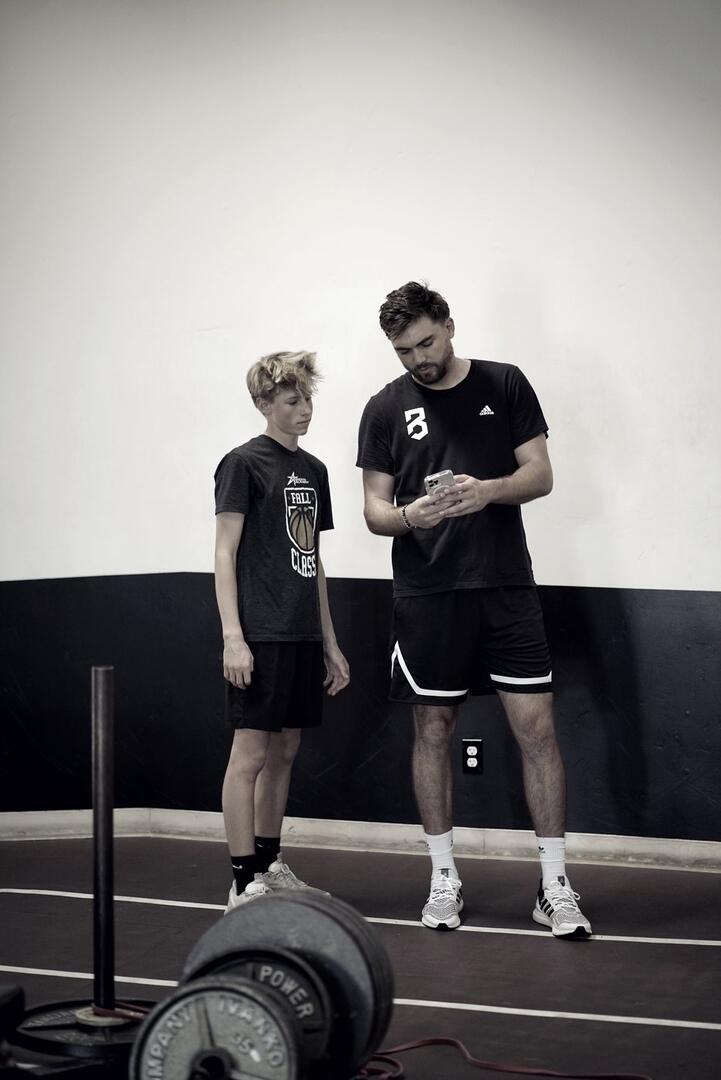
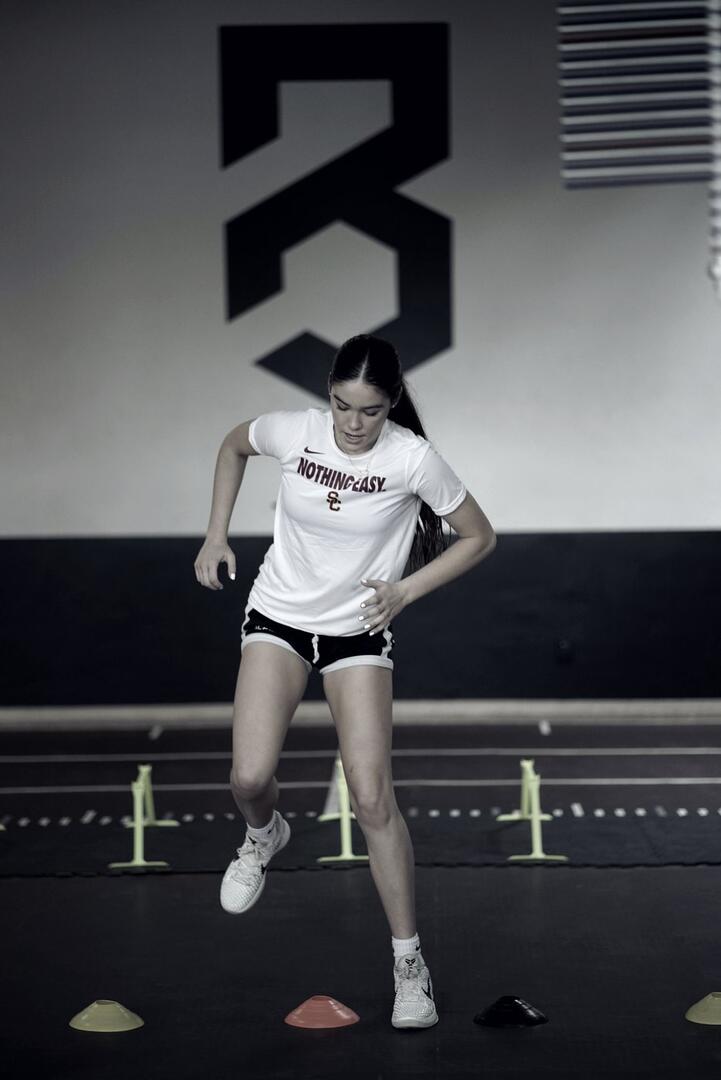
Biomechanics assessment for high school athletes


Most training is guesswork.
High school athletes lift. They run. They go to camps and showcases. The effort is real, but most programs are general: built for everyone, and no one in particular. Knowing which qualities will actually translate to their sport, or which movement patterns are setting up an injury, takes data that exists only at P3: twenty years of elite athletes measured and tracked to what happened next.
P3 has it because it was built on caring for each athlete as an individual. For two decades, that has meant designing programs one athlete at a time, for high school, college and pro athletes, and measuring what each one changed. Your athlete’s plan starts there: their own data, read against everything P3 has learned and against the athletes they hope to become, built for their body alone.
Already working with a trusted strength coach? We brief them on the findings and share recommended training strategies.


The window is high school.
College coaches recruit production and physical tools: size, strength, speed, power. Most athletes chase it with more skill work and more showcases. What’s usually missing is precise physical development, built in the few years while the body is still changing.
Almost no one your athlete competes against will ever have this level of insight into their own body.
We measure what drives speed, not just speed.
A sprint time tells you how fast your athlete is. It doesn’t tell you why, or what to change. P3 records 500+ biomechanical variables in a research-grade lab and reads the kinetics and kinematics behind speed, power and injury risk. It’s the difference between recreational tracking and championship intelligence.
Every number is read against 5,000+ elite athletes and against thousands of high schoolers. Every athlete P3 assesses makes that read sharper. Then every need is ranked: what will make the biggest difference, in order, and why.


Video file
Don’t wait for injury.
P3’s injury models are built on what happened to pro athletes after they were assessed. One, built on 381 NBA players tracked for two years, identified 6 of the next 10 traumatic knee injuries before they happened.
The patterns behind those injuries already show up in high school athletes, while there is still time to change them.
Video file
Measure. Build. Measure again.
A combine tells you where you stand. P3 tells you what to do about it, then measures what changed.
Ajay Mitchell arrived at UC Santa Barbara at 180 pounds, with a vertical score in the 5th percentile of NBA players. He trained with his strength coach and reassessed at P3 throughout college, adding 19 pounds and 4.5 inches to his standing vertical. Today he’s a key part of the Oklahoma City Thunder’s rotation, and his lateral score is in the 95th percentile of the league.

They came to P3 as high schoolers.
Luka Dončić was sixteen. Caleb Williams was fourteen. More than 2,000 high school athletes who trained at P3 have gone on to earn college scholarships.
Jabari Smith Jr. first came to P3 as a high school junior. His assessments identified his most important needs, and his plan was built around them. He became the No. 3 pick in the 2022 NBA Draft, and he still assesses and trains at P3 today.
College Prep starts the same way.

The people behind your program.
Every College Prep athlete has one lead coach, the same coaches who train P3’s pros, backed by the team and intelligence that set the standard in pro sport: biomechanists, engineers, data scientists and twenty years of tracked results.
Nick Potthoff — Lead Performance Coach, Santa Barbara. A former All-Conference basketball player at Whittier College who went on to play professionally overseas, Nick joined P3 in 2023 and oversees athlete development for youth, collegiate and professional athletes. He holds a master’s in Applied Sports and Exercise Science from the University of Derby, and his coaching spans collegiate programs and NFL offseason training.
Tom FitzSimons — Lead Performance Coach, Atlanta. Before joining P3 in 2022, Tom coached at Westmont College, where his athletes won three NAIA national titles and he was named USTFCCCA West Region Assistant Coach of the Year. He has coached combined-events athletes at the 2016 and 2020 Olympic Games, and competed professionally as a decathlete, winning bronze at the 2014 USA Track & Field Championships.
20 years. 5,000+ athletes. The standard in human movement.
Dr. Marcus Elliott, a Harvard-trained physician, founded P3 in 2006 to bring medicine’s standard of evidence to training. P3 pioneered force plate and 3D motion capture assessment in professional sport. Both are now standard across the leagues.
Why no one else has this data: pros don’t sign up to be studied. They show up to get better, and for nearly twenty years the best in the world showed up at P3.
Dr. Elliott was named the 12th Augustus Thorndike Lecturer at Massachusetts General Hospital, the only non-orthopedic honoree. P3’s research is peer-reviewed, and its story is told in Ballistic (2025).
As seen in the Wall Street Journal, ESPN The Magazine, Sports Illustrated, NBA.com, Fast Company and The New Yorker.
"When you have a prospect that young, the earlier you can expose him to P3 the better."
— Bill Duffy, NBA agent, on Luka Dončić, Wall Street Journal
What to expect.
The visit is built to fit in a weekend: the assessment, then two coaching sessions with your athlete’s lead coach.
Kimberly Drewniok, a German national team volleyball player, inside her P3 assessment. College Prep athletes go through the same experience.
“It is calibrated against AAU athletes and professionals. It isn’t just one athletic trainer’s perspective, but looks at a person honestly with reference standards… In a world full of possibilities, this simplifies what will make the biggest differences in basketball, which surprised me.”
— Parent of a College Prep athlete, physician-scientist
What you take home.
Twenty years of what P3 has learned, applied to your athlete. What to work on, in what order, and why.
Taught in person, shared with anyone who helps them train. From a school strength coach to a trainer at home, everyone builds from the same picture.
Reassess in six to twelve months. Timed to your sport calendar, at a returning-athlete rate, so progress is measured, not guessed. You can book it before you leave.
P3 Advisory. Your athlete’s lead coach updates the program as they develop, answers your questions, and works with their coaches at home. Advisory and P3 Remote Training are offered by invitation after the assessment.
The College Prep Assessment
Behind every P3 assessment: a research-grade biomechanics lab, a staff of biomechanists, engineers and data scientists, and twenty years of elite athletes tracked to outcomes. No team has built anything like it. Pro teams invest six figures a year for access. High school athletes get the same assessment, in person, for $3,500.
Includes the full biomechanical assessment, same-day findings, two in-person coaching sessions with a lead coach, a written report within two weeks, and an individualized training program. Available at P3 Santa Barbara and P3 Atlanta.
The time to start is now. Even with the best insight and the best plan, physical qualities take hard work and time to develop. The sooner your athlete starts the right work, the more of it shows up when it counts.
Next available assessment dates: December. Applications are reviewed in the order they arrive.
Questions families ask.
Who is College Prep for?
High school athletes, whether they’re aiming to play in college, staying healthy, or getting the most out of their high school years. It works best for athletes with some strength training experience, because they’ll carry out their program at home. Athletes newer to training get the most from it alongside a strength coach, and we’ll brief that coach on the findings. You don’t need to be a D1 prospect. College Prep is built for high school athletes, but younger and older athletes are welcome to reach out.
My athlete is coming back from an injury. Is this the right time?
Often, it’s the most important time. Many athletes finish physical therapy and go straight back to full-speed play without being ready for the forces their sport demands. That gap is where P3 works: the assessment shows how your athlete is moving now, especially the mechanics associated with injury risk, and training builds them back progressively to the high-force actions of their sport. P3 works alongside your athlete’s surgeon and physical therapist and can support rehab in person, but not remotely. Tell us about the injury when you apply.
Is P3’s data relevant to high school athletes, or only to pros?
Both. Insight into the best movers in the world gives us insight into all movers. P3 has worked with thousands of high school athletes, and results are benchmarked against peers and against college and pro athletes, so you see where your athlete stands and the gap to the level they’re aiming for. Performance measures apply across ages. P3’s injury models were built on pros, so for teenagers we use them to flag patterns worth addressing, not to predict an individual injury.
Can you tell us if our athlete is at risk of injury?
Injuries are complex, and no assessment can predict them with certainty. But many of the mechanical contributors at the knees, ankles and back can be measured and trained. When the assessment finds one of those patterns, it becomes a training priority.
How will we know if the training is working?
Reassessment, recommended every six to twelve months and booked at a returning-athlete rate. Every metric is reported as a percentile against P3’s database of 5,000+ athletes, so progress is measured, not guessed. The reassessment shows what your athlete accomplished, which qualities moved, and what the next cycle should focus on.
My athlete already has a trainer. Is this for us?
Yes. P3 is the intelligence that makes the training your athlete already does more effective. Our job is telling them where to focus and why, not designing every rep. If your athlete works with a coach, we’ll walk them through the findings and priorities so everyone builds from the same picture.
Do we need to live near P3?
No. Families fly in from across the US and overseas, and the visit is built to fit in a weekend.
Day 1, morning: the assessment, about 1.5 to 2 hours, with findings reviewed in person the same day.
Day 1, afternoon and Day 2, morning: two coaching sessions with your athlete’s lead coach, 1.5 to 2 hours each. Your athlete learns their program in person rather than being handed a document. The written report follows within two weeks.
Some athletes choose to stay longer.
What if we want more support after the visit?
The plan is built for your athlete to run on their own or with their coach. For athletes who want ongoing support, P3 Advisory keeps their lead coach involved, updating the program as they develop. Advisory and P3 Remote Training are offered by invitation after the assessment.
Tell us about your athlete and what they are working toward. We review every application and reply within two business days, either way.